29/09/2024 Stamford Bridge, East Yorkshire

Hoopoe: This long staying bird that has taken up residence in a small housing estate just north of York, happily feeding on the manicured lawns has been here for over a week now. 

With its pinkish-brown body, distinctive black and white wings, long, black, downcurved bill and a long pinky-brown crest which it raises when it gets excited, the hoopoe is a sight to behold.


They don't breed in the UK, and only about 100 might turn up in the UK each year - normally on the South Coast in spring when they are migrating north from Africa to Europe and offshoot and end up in England. They tend to be solitary birds.
Kris, Gary and I saw the bird last week wen we were passing back from Flamborough, but only saw the bird a few times briefly before the light  went. This time we pulled up, jumped out and bingo! The bird was foraging for leatherjackets outside of number one Fox Grove. 
Not particularly rare these days, but forever a such a great bird to watch. 

29/09/2024 RSPB Bempton Cliffs, East Riding of Yorkshire

Pale-legged
Leaf Warbler: This bird is huge, the second British record after the he first, a morbid bird found on St Anges, Scilly in November 2016. But, due to some family commitments I and to wait a full day before mobilising and jumping in the car with Iggo, Paul Baker and Steve T.


Remarkable record this being the second confirmed record for Britain and even more remarkable that I managed to get any photos of it. A shy species that usually forages for insects on the forest floor, sometimes climbing up low shrubs and vines to glean prey making even seeing the bird very difficult. 
Pale-legged warblers resembles Arctic warblers but with dark greyish crown contrasting with olive-greenish mantle and pale greyish pink legs and feet. They are indistinguishable from the very similar looking Sakhalin Leaf Warbler visually (or oftentimes even in hand), and in the field it can only be told apart by its call (~6Khz instead of ~5Khz) or characteristic song.


Hopefully this is a sign of things to come as its not even November yet. What else is out there waiting to be found? Or what next will be blown on to our shores?

22/09/24 Flamborough, East Riding of Yorkshire

Barred Warbler: Today started with so much promise, with the hope of twitching my first Pallas's grasshopper warbler or PG tips. One was found by a local birder the day before although news broke late which left us leaving very early on Sunday morning for Tynmouth. 


Unfortunately, but not surprisingly the PG tips did a bunk over night, not surprisingly. We stayed until we were sure it was gone before heading down to South Gare, an area of reclaimed land and breakwater on the southern side of the mouth of the River Tees in Redcar and Cleveland.
It was here that a showy barred warbler had been seen pretty consistently in a small area of dense scrub in a small hollow that the locals call the Bomb Hole. 
Yellow-browed Warbler: After having our fill of the brilliant barred Kris and I headed further south to Flamborough where the weather started to deteriorate with thick fog and drizzle greeting us upon our arrival. 

Blackcap: By the time we pulled up the Eastern olivaceous warbler, which had been showing well all morning had also done a bunk. Luckily I had bagged the bird last year at Long Nab, Burniston.
Kris and I ended up meeting up with Gary and Sarah before searching for RBF and YBW that showed well despite the thinning fog.


Red-breasted Flycatcher: One our way home kris got a message from Carl saying that there was a hoopoe on the way home in Stamford bridge near York. The bird was flighty but we had some brief  views before it went to roost in a willow behind the houses. Big thanks to Carl for the heads up. 


15/09/2024 Fairhaven Lake, Lytham Saint Annes, Lancs

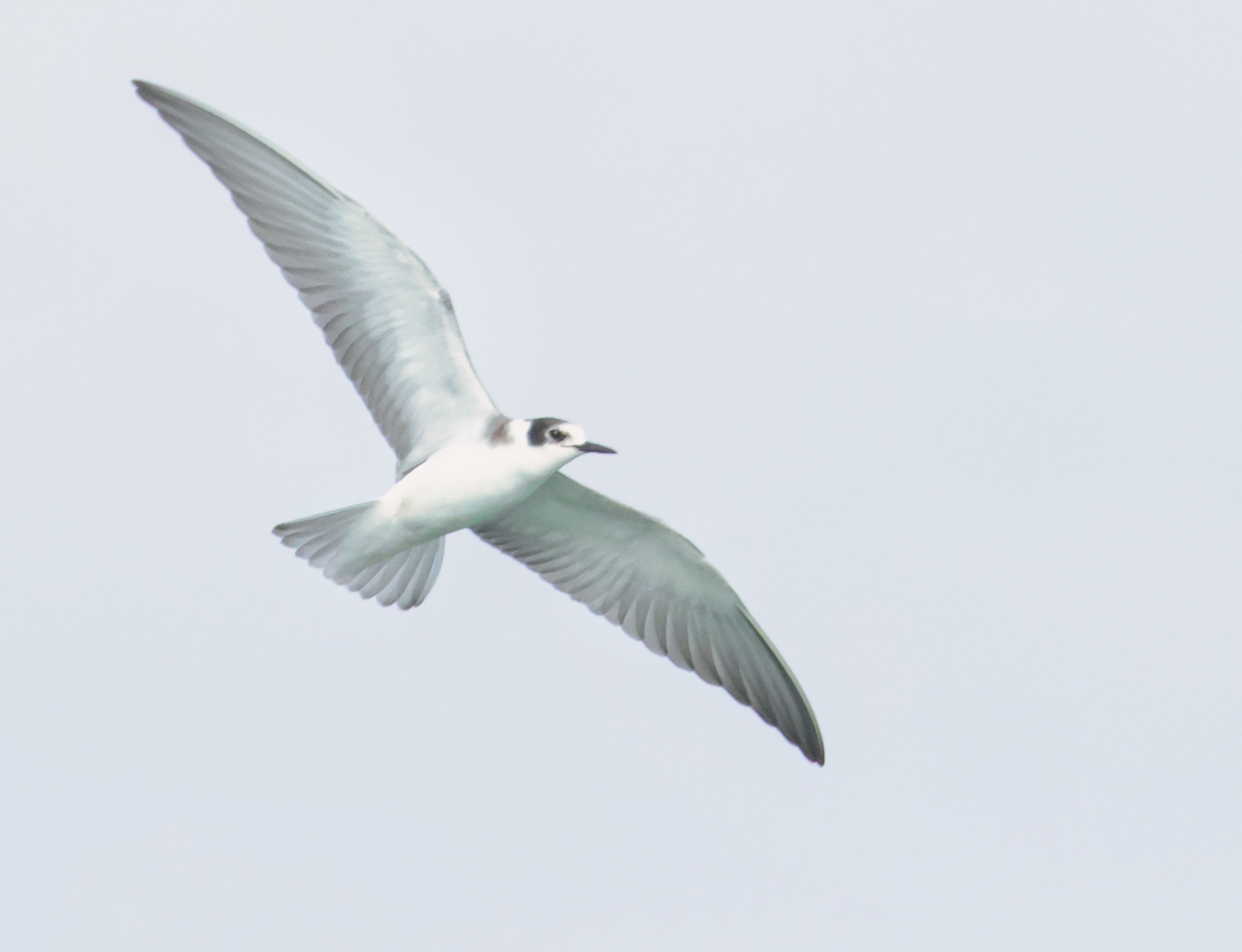
Black Tern: I have recently purchased the 200-800 f9 canon lens and the canon R7 and I have been really keen to get out as much as I can and practice with it.

It's been a big learning curve thus far, with a heavier bigger lens and new controls on the camera it's taken a while to get to grips with the new kit. 

One of the things I wanted to practice with was fast moving birds, and boy, these back terns where defiantly a good subject to practice on. The pair were constantly on the move, whizzing through the air and foraging on the water and in all honestly I really struggled. The auto-focus wasn't capable of tracking the birds and the crop sensor made things more difficult at 800mm to track the birds.

These where the best I could manage with the time I had. Despite my frustrations it was great to spend the afternoon with these pair of back tern. They are great birds. 

16/09/2024 Donna Nook, Lincolnshire persistent

Red-backed Shrike: An unforgettable encounter with a pair of RBS on route to a job in Lincolnshire. Where I had two very confiding birds in perfect light put on a sensational show for me.

Autumn migration is one of the highlights of the year for us twitchers, but the quality and quantity of arrivals is always dependent on the prevailing weather conditions.

A persistent easterly winds has brought a scattering of scarce birds from the east including good numbers of red-backed shrikes, with many individuals stopping off in Britain on their way from Scandinavia.

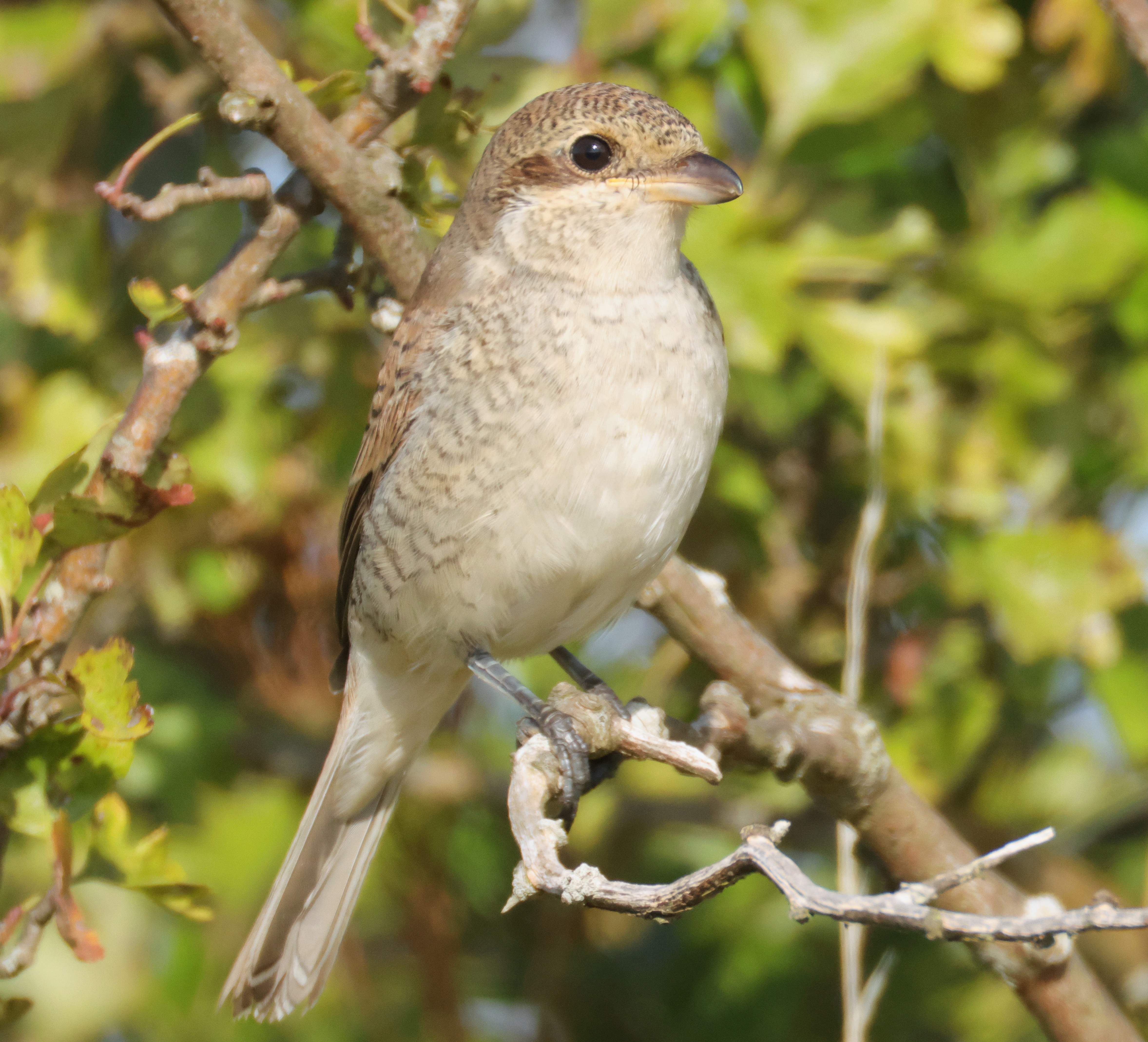


Red-backed shrike was once a common British breeding bird that disappeared towards the end of the last century. We can only hope the rise in spring and autumn migrants might, one day, lead this charismatic species to breed regularly here once again.

 
Donna Nook National Nature Reserve is vast covering over 10 km of Lincolnshire coastline including sand dunes, inter-tidal areas, saltmarsh and open lagoons. The reserve is rich in bird life including many breeding species as well as more uncommon passage migrants and rarities.

Both birds were pretty loyal to a small area of hawthorn and buckthorn just north of the main car park. Special thanks to Paul Peters and Carrie for their help relocating the birds and being so friendly. 

13/09/2024 Rishton Reservoirs, Blackburn

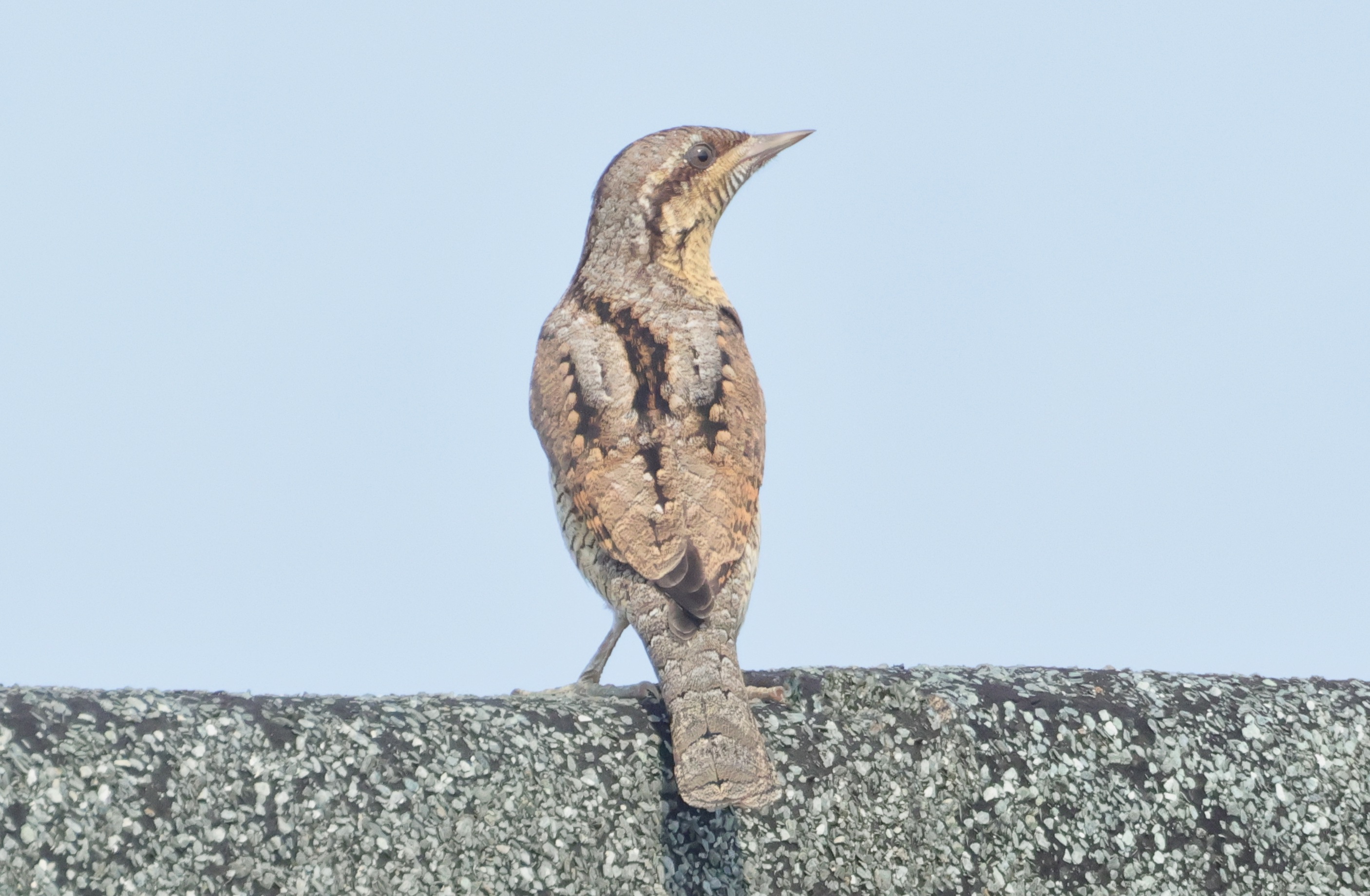
Wryneck: These smart little woodpeckers are even more scarce here in the North West, so when this turned up I could't resist a local twitch. 

After arriving I ended up beside a group of guys looking through their scopes at the bird feeing on the opposite side of the reservoir. By the time I walked over I had told a dozen or so other birders who were looking in the wrong area where to go.
Following me our caravan of birders arrived, quiet footed and without flushing the bird, which remained for a long while posing on the rocks and feeding on the grassy bank.

Its such a privileged to get up close of personal with wryneck, their cryptic camouflage plumage and shy nature can make them particularly difficult to see at times. 


European-breeding wrynecks winter in Africa, returning to their breeding grounds at the same time as the cuckoo, giving the bird its old country name of the cuckoo’s mate. This bird would be on its way south back to Africa.

06/09/2024 RSPB Marshside, Southport

Wilson's Phalarope: A rare vagrant from America, and one of those slender, thin billed polyandrous (one female mates with multiple males) waders were the females are bigger and more brightly coloured than the males.


This bird was not a sexy plumaged female but a 1st winter bird that has spent the last two days on Junction Pool. When I arrived the light was terrible, from the screen you it was almost impossible to get anything but distant silhouetted record shots. 
But from Marine Drive the light was much improved and I managed to get these. OK, they could be better, but also could be a lot worse. 
Wilson’s phal breed in western Canada and the western United States. It is found on marshes, shrubby areas, and wet meadows, and during migration on salty lakes and mudflats in Central America. It winters in South America particularly on salt lakes near the Andes in Argentina.

01/09/2024 Spurn, East Riding of Yorkshire

Wryneck: Spurn is synonymous with the arrival of migrant birds from Scandinavia during the autumn migration period and is a standout area for its amazing track record of producing rare and scarce birds. 


Toady might not have thrown up anything mega rare, but its was one of those magical migration days. Every other bush and shrub contained a pied fly or lesser whitethroat and we managed to relocate the wryneck at the point. 

Pied Flycatcher: The point was dripping with migrant birds, there was a small dell areas that had over a dozen pied flied, spot flys whinchat, yellow wags, redstarts and wheatear all feeding in the shrubs and movng through the area.

Whinchat: Todays trip was the brain-child of Gary, who needed wryneck and after dipping several in the past he had his eye on this weekend it's probably one of the most eagerly anticipated weekends to connect with wryneck. 
Red-backed Shrike: We had a smashing day, which was topped off with a wonderful woodchat shrike near the Wildlife Trust visitor centre. 

13/08/2024 RSPB Burton Mere Wetlands, Cheshire

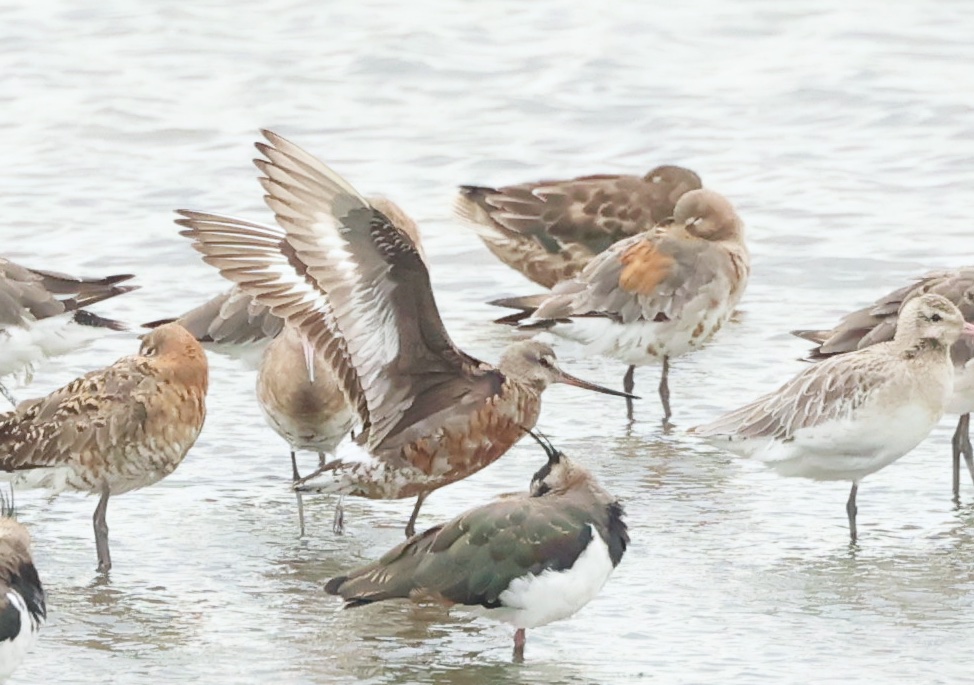
Hudsonian Godwit: Congratulations to a good friend of mine Colin Wells who found this brilliant bird on his patch. It's believed that this rare shorebird was heading to its wintering grounds from Canada and Alaska to South America.
News broke first thing and the bird relocated in the morning where a large crowed of birders soon filled the car park and the Border hide. The bird showed really well, and even gave me a little look at its black underwing, in contrast the black-tailed varieties have a white underwing.


The wader, with its long beak and spindly legs is now inhabiting the same space as its English counterparts, the black-tailed godwit and the bar-tailed godwit pictured here. 

This side-by-side shot gave you an example of all three standing in a row. 


Trip Report - Madeira, Portugal

Zino's Petrel: After booking a selection of Wind Bird Pelagics and land based birdwatching tours we stayed in a small village in the southeastern part of the island, a stunning little village nestled within a deep valley, surrounded by lush steep slopes that somewhat resemble the opening helicopter scenes from Jurassic Park!


Wind Birds have on offer a selection of pelagic tours including their 'flagship' three days of ultimate pelagic expedition focused on petrels, storm petrels, shearwaters and any other vagrant bird species that might be around the North Atlantic Ocean.

Desertas Petrel: We booked onto the Wind Birds Half Day Birdwatching Tour where they take you to several locations and its almost guaranteed that you will see the endemic Madeiran birds such as the Madeiran firecrest, the Trocaz pigeon and the Madeiran chaffinch. 


Bulwer's Petrel:  We also attended the Wind Birds Zino's Petrel Night Expedition Experience in the evening. Seeng a few silhouetted birds against the moonlight sky as the Zino's calls increased and intensified was a sensational birding experience. 

Madeira Storm-Petrel: The Madeira bird list is pretty small, with a low diversity of birds, however we managed to tick 40 birds through the whole trip, this included the Madeira storm-petrel, otherwise known as the band-rumped petrel, Zion's, Desertas, Wilson's, Leach's, Euro, Bulwer's petrel, Madeiran firecrest and Trocaz to name a just a few. 
Trocaz Pigeon: From start to finish, including the Wind Bird Pelagics, I can't recommend this trip highly enough, Hugo and Catarina are friendly, relaxed and knowledgeable. 

Please read more on my Trip Report below or click here - https://austinmorley.blogspot.com/p/madeira-portugal-june-2024.html


10/07/2024 My Garden, Golborne, Cheshire

Lesser Redpoll: A new bird for the new garden, this redpoll had been visiting the feeders through the day. These are tiny finches, only slightly bigger than a blue tit, and are sociable birds with chattering twitters and songs that enliven any garden. They are resident throughout the north of the UK particularly the far north and they tend to move further south as winter approaches.


I was surprised to see one in Summer, they are synonymous with visiting bird feeders during the Winter months. Perhaps they are breeding locally?In its breeding range, the key requirement is woodland and in particular birch and alder. Plantations of non-native conifers, particularly when the trees are relatively young are also favoured. 
The garden is looking really good at the moment, green and lush with the boarder plans and shrubs looking healthy and about to burst into colour. 


Identifiable by their streaky brown plumage and red patches on the head, lesser redpolls occasionally carry a red patch on their breast as well.

A welcomed distraction after returning back from a long, sunny holiday watching birds in Madeira. 

Trip Report - Delta de l'Ebre, Tarragona, Catalonia, Spain

Griffon Vulture: This week I turned 40, a milestone I have not been looking forward to, but one I could't escape. However I was able to escape the UK for some Spanish summer sun.  


Western Swamphen: Located in the province of Tarragona in southern Catalonia, the Delta de l’Ebre is an impressive natural landmark which attracts thousands of nature-lovers each year. 


Western Bonelli's Warbler: Where the Ebro River meets the Mediterranean Sea, the Delta de l’Ebre is home to a wide variety of wetland birds. I also ventured out up into the hills and to the drylands of Lleida and Zona Picnic Mont-roig.
 

Collard Pratincole: This trip was actually a surprise trip that the one in million partner of mine Dawn decided to gift me, with some help from Gary Edwards they conspired together to find a location that's birdy enough for me and offered family activities. 


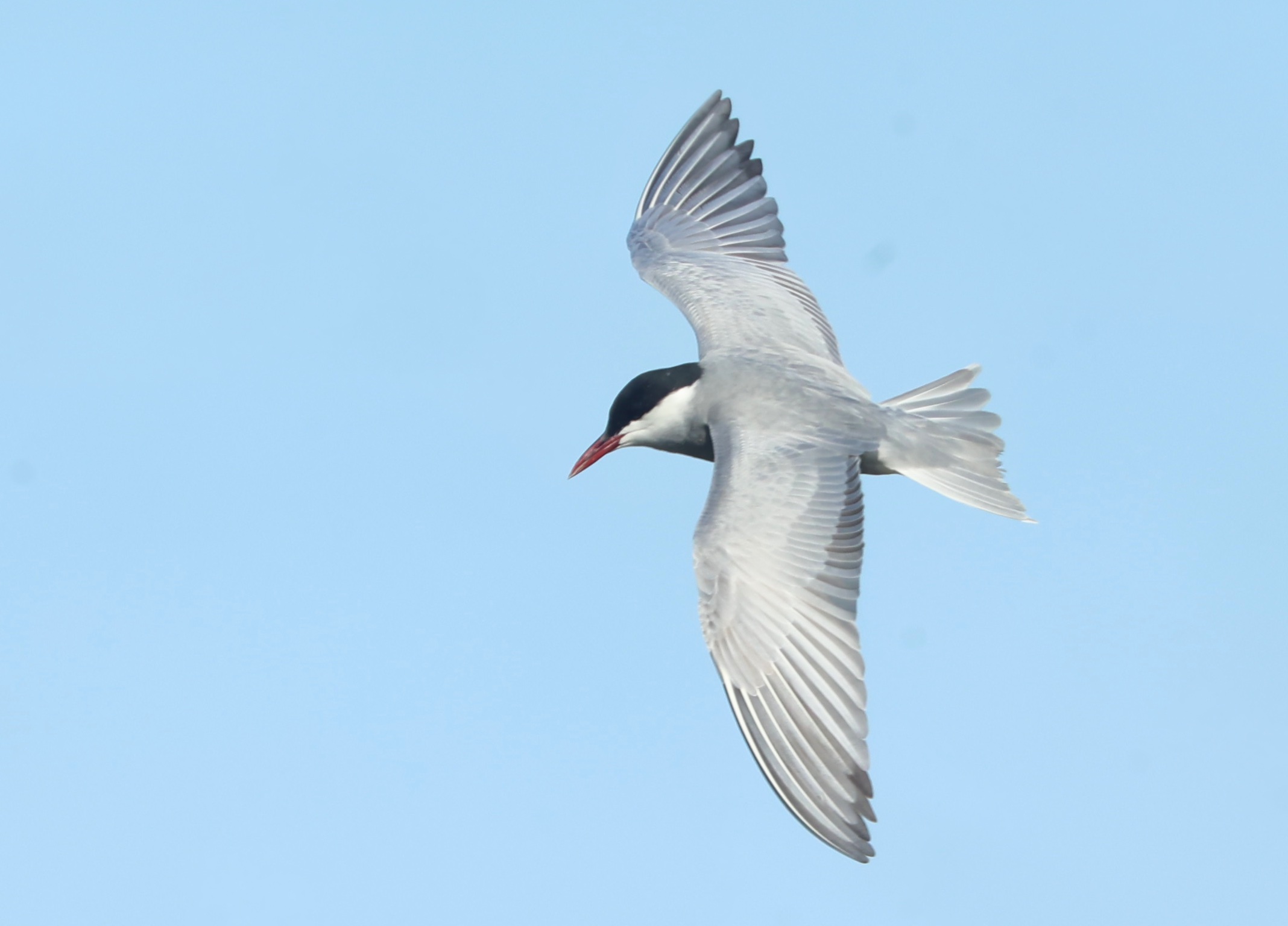
Whiskered Tern: The area close to the sea is comprised of large lagoons and marshes, dunes and sand, with small remains of riverside forests by the banks of the river. Due to its naturalistic and ornithological character, the ares is internationally known. 
Gossy Ibis: Please check out the detailed trip report at the bottom of the blog page.