European Storm Petrel: I’ve long hoped to go on one of the regular pelagic trips that run from the very beautiful St Mary's, the largest of The Isles of Scilly. Although we were only able to do one of the three trips that we originally booked, as the ferry crossing was cancelled due to storm-force winds.
Great Skua: Still we struck gold with the ‘shear’ number of birds. A truly wonderful experience. Gary, Patrick, Damian and I travelled down separately and stayed at the Garrison Campsite on St Mary's. A nice campsite with good facilities close to Hugh Town. The only negative was the very steep hill you have to embark on to get to and from the campsite.
We have had this trip booked for at least a year and thought we were all prepared, then Covid19 struck and we were worried the pelagics would be cancelled or that the island remained locked down. Thankfully this didn't happen. But storm Ellen was on her way. She struck with 60mph winds which forced the ferry crossing to be cancelled.
 Sooty Shearwater:
 Due to this we were unable to attend the friday pelagic, so keeping the sunday pelagic, we also booked onto the Monday one instead.
The Sunday pelagic trip left the key at 8am with Joe Pender as Skipper of the "Sapphire". As we left bread was thrown from the start but as a good number of herring and lesser black-backed gulls followed.
As we journeyed south there were a few Shags on the rocks and sandwich terns in the bay. Eventually some gannet joined the flock of gulls that were following us and we had some fast flybys from a sooty shearwater and a couple of euro-stormies.
Gannet: We stopped about 13 km South of St Mary's and Joe started to fill up a chum bag.
Now I've been told that this chum smells bad, but nothing prepared me for how bad this actually was. It was so bad I overheard Joe say 'even the maggots are dead'!
Wilson's Storm Petrel: We drifted here while the chum bag leaked its irresistible oils across the water leaving a smooth pale slick in our wake.
With the strong smell of rotten pilchards and fish oils wafting in the air it didn't take long before we struck gold.
Not long after a few euro-stormies and several fulmer joined flew in to check out the smells we had our first Wilson's giving us a chance to see their golden yellow webbing on their feet.

To everybody's surprise two Balearic shearwaters did a flyby from the boat and kept on flying westerly, along with several distant Manxies.
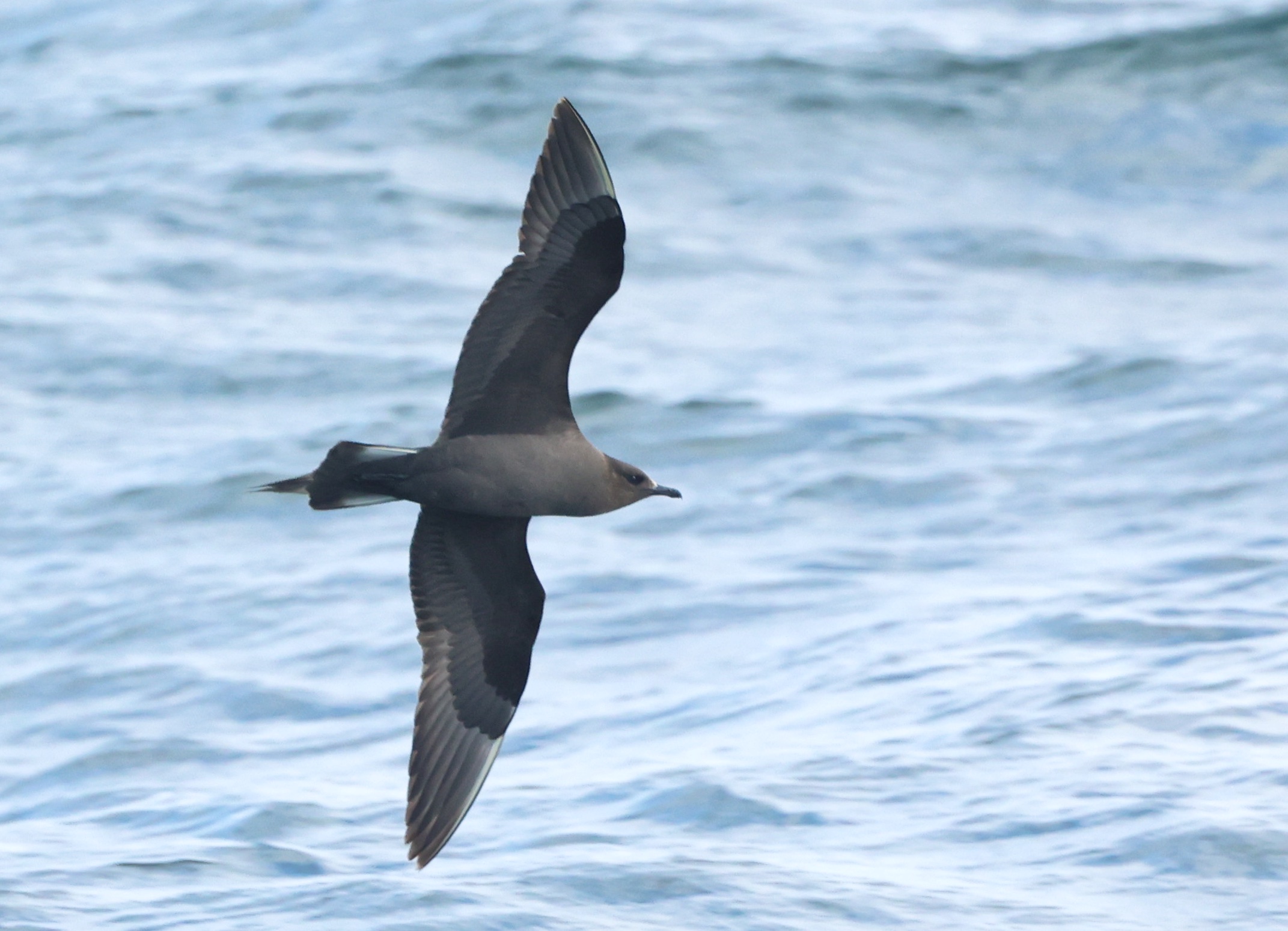
Long-tailed Skua: The unmistakable dark, stocky, brutish shape appeared on the horizon as the great skua came to check us out, flying right over the spectators on the deck. Also a long-tailed skua came flying past.
This smart juvenile didn't hang about and raced right past, up and along the slick.
Sabine's Gull: For me one of the highlights was seeing my favorite UK gull, the sabs gull. We had two, one sporting a full back hood.
These exquisite gulls came close to the boat, as did the fast-flying Wilsons and Euro-stormies, so lots of great birds around. We even had several sightings of common dolphin, as well as a single Sunfish which looked very strange as it flapped it's fins in the air.

These black-headed sized gulls are in fact the only member of its genus, the Sabine's Gull is like no other gull. Many of its behaviors resemble those of terns more than gulls.
When they fly they have a very shallow flight pattern, bobbing up and down as they pick food from the surface of the water.
Scott Reid, who volunteers on the boat, was the dedicated spotter and bread thrower, but it wasn't only bread he was throwing overboard, he also threw popcorn and mealworms. And it was the mealworms that the sabs gulls were interested in.
Unfortunately the fully hooded individual didn't hang around and flew off up the two mile slick and out of sight. However the adult winter bird, the one lacking the stunning black hood did stick around.
It even sat on the water close to the stern giving us all some really excellent views. A really nice treat as we watched dozens of stromies whizzing around too.
Great Shearwater: As I was leaning over the side of the boat trying to improve my lens reach, I heard Scott shout 'great shears'. The whole boat turned their heads as we caught a glimpse of the bird flying towards from the other side of the boat, the side in the strongest light.
All I could manage was a few frame bursts before the bird disappeared and I wasn't quick enough to adjust my camera settings, so ended up with some back light washout images.
Image quality aside I was just pleased to see one close up, especially knowing that on the Friday pelagic trip they had in excess of 30 birds many right up to the boat. So I was just pleased to see one.
Throughout the pelagic we had a couple of greats, many of which kept their distance and one of which was getting chased down by a great skua. We even witnessed the bird crashing on the the surface of the water, possibly to evade the advances of the skua. Pretty cool.
Great Skua: The great skuas were real brutes and bullied their way in to the gull flock, scattering the gulls as they took the monopoly on the slick feeding of the floating fish bits.
European Storm Petrel: These small black gems were a real joy to watch as they pogoed on the surface of the water, or whizzed up and down the slick. Spray and prey was the only option with these fast flying birds, hold down the cameras trigger and hope you've got one.
Wilson's Storm Petrel: We were spoilt by the numbers of Wilson's .
Wilson's Storm Petrel: The pelagic was brilliant, much better than I anticipated and I can't recommend it enough. Every birder should see this as a real birding pilgrimage that everyone should experience.
Our totals were 14c Wilson's storm petrels, 10 great shearwater, 5 Sabine's gulls that consisted of 3 adult and 2 1st summer birds. 4 long-tailed skua, 2 Balearic shearwater, 4 sooty shearwater, and up to 150 European storm petrels.
Also a good supporting cast with fulmer, common dolphin, great skua, gannat and sandwich tern.
The Scillonian Crossing
Manx Shearwater: Let's talk about the crossing on the Scisillion, or otherwise known as the vomit rocket, a strange name coined by the Scilly islanders and a name that is only partly correct. The ferry takes three hours to cross, so not really a rocket, but it did make me vomit and feel very sick indeed.
The crossing over to the Isles of Scilly on the Scillonian can sometimes award you with some good views of seabirds, and knowing this, our group grabbed some seats on the open deck, binoculars in hand (and a sick bag for me).
On the way out we had dozens of Manxies, gannet, fulmar and a few euro-stromies, but the highlight was a single Balearic shearwater.
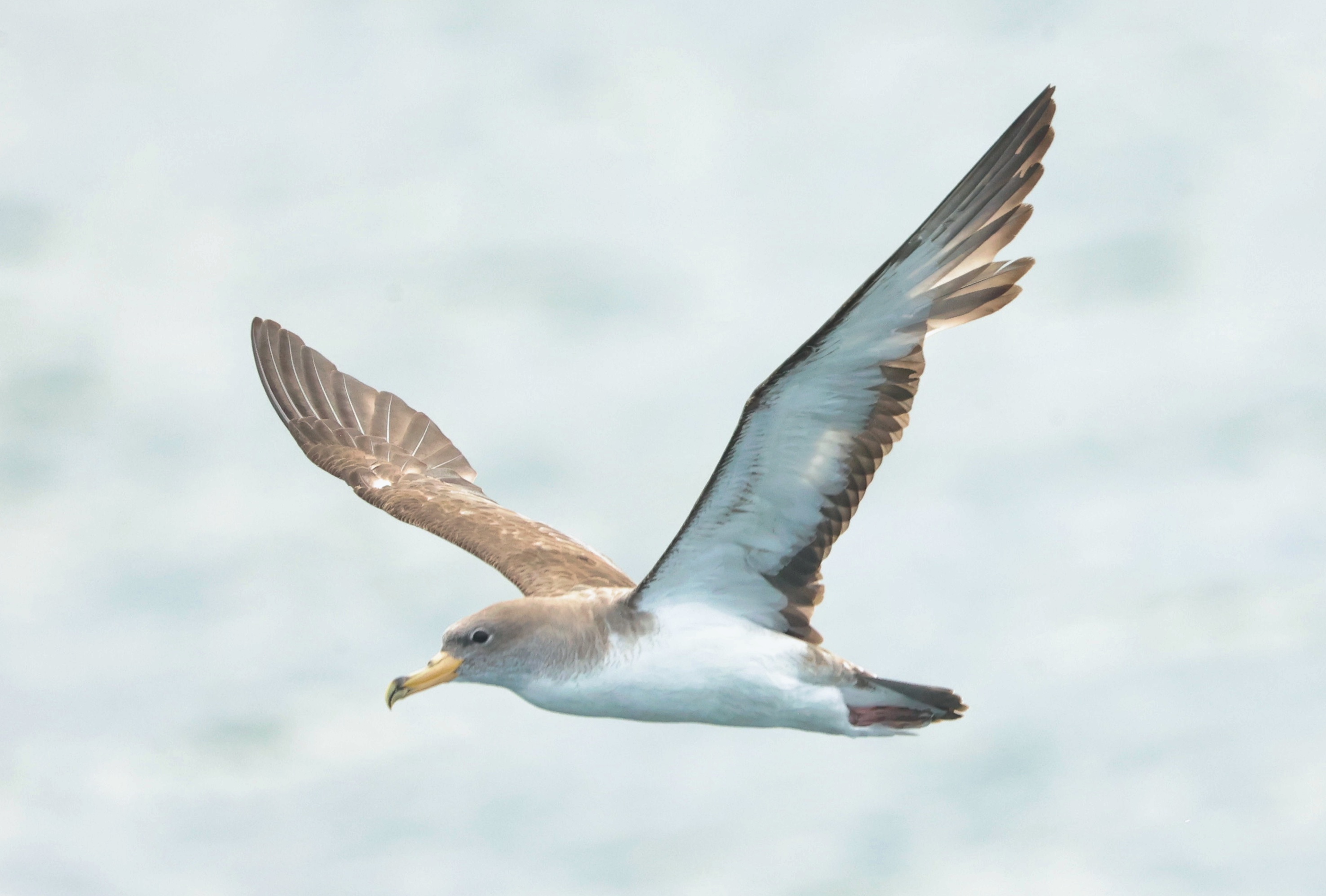
Sooty Shearwater: On the return journey with calmer seas, lighter winds and no vomiting, we managed to get 2 shooty, 3 great, 1 Cory's, 1 great skua, 8 euro-stormies and several common dolphin, a much more pleasant trip back.
Great Shearwater: Overall we had a really fantastic time a real adventure with the odds stacked against us.
Our original inbound ferry and our rescheduled outbound ferry were both cancelled, in addition we received some of the most shocking customer service from Penzance Helicopters, who are simply a bunch of charlatans - they told us one thing then did the opposite. A disgusting company that I hope I never have to deal with again. However, Bob Flood who runs the Scilly pelagics, was an absolute diamond, a really understanding guy who was very accomodating. Thanks again Bob, you're a legend. Special thanks to Scott too, a good old mate who not only gave us some really good gen but offered a lot of enthusiasm and encouragement when we were having problems once the ferry was cancelled.





 Wryneck: we managed to catch up with a male red-backed shrike and a juvinile woodcut shrike, but the highlight was this striking wryneck that Ian Ellis relocated and we went back for on our last day.


