08/07/2023 The Isle of Mull, Argyll and Bute

Golden Eagle: The Isle of Mull is the third largest of the Hebridean islands, and one of the most beautiful. Situated off the west coast of Scotland has varied habitats including mountains, moorland, sea lochs, hill lochans, damp boggy marshes, sandy beaches and open seas. 

On Mull the population of white-tailed sea eagles is as dense as anywhere else in Scotland, and the island also boasts having more pairs of the majestic golden eagle than anywhere else in Scotland.

Many other birds of prey inhabit the island, including good numbers of breeding hen harriers and short-eared owls. Red-throated divers can be seen on both freshwater and sea lochs, where great northern divers also regularly linger into the summer in their splendid breeding plumage. The same sea lochs are the home of otters, and indeed Mull must be one of the best places in Britain to observe these captivating mammals. 

I hadn't been back to Mull since my first visit with Dawn way back in May 2015. And with Gary Edwards celebrating his 40th birthday this month I conspired wit his wife Elise and organised a bit of a surprise weekend away so he could tick off golden eagle and corncrake which we saw on Iona.
After arriving on the inland we invested most of our time in search of golden eagles, concentrating our efforts on the 'Three Lochs' viewpoint in Glen More and the long winding roads around the south shore of Loch Na Keal stopping and scanning the mountain ridges.
Common Sandpiper: It wasn't until the Saturday that we connected with an adult golden eagle on the south road of Craig. We spotted the bird from the moving car and before we pulled over and jumped out the eagle had landed and we watched it take flight soaring over our heads before gaining hight and drifting high over the stunning valley and across the mountains. Magical. 

We spent hours driving and waiting at these hot spots with not even a sniff of a goldie, although we were joined by Kristian Wade and his family who were spending their last reminding days of their holiday also looking for golden eagles. 
Otter: Another highlight of our trip was picking up this dog otter foraging in Loch Na Keal on our first day, we watch dit fishing for a short while before it left the water and crossed the road presumably into a nearby halt. 


Short-eared Owl: Here is another one of our target birds that we were hoping to see during our short trip on Mull. 

Short-eared owls breed on the moors throughout the UK, though finding them usually involves a longer trip than watching during the winter. 


We struck luck on Sunday evening as driving early evening we saw a birder stood in a lay-by just past Ardachoil Farm north of Loch Spelve. We pulled over and could see that he was watching a single SEO quartering over the marshy field.

Short-eared owls mainly hunt during the daytime, flying low over moorland, grassland and saltmarshes where they feed on field voles and small birds. About the same size as the barn owl, but with long wings
One of my all time favourite birds Gary and I couldn't pull ourselves away from observing the bird floating over the grassy wet field and periodically turning mid air and punching on its prey, often without success. 


White-tailed Sea Eagle: Unfortunately we were unable to book onto the Mull Charters boat trips but still had some great views of white-tailed eagles and I even had one close to our hotel one morning while I was up real;y looking for otters along then cracky shoreline of the Sound of Mull.


Another good spot for them was along Loch Na Keal and the southern road near Tiroran Community Forest close to Balevulin. A little further south along this road we Loch Beg Bridge we had some nice views of both female and male hen harriers hunting. 

I would like to offer my thanks and appreciation to Rhys Richards who gave me a ton of gen and was a big help in my thinking process and planning of the trip. With a really short amount of time we had his advice and interest was very much appreciated. Cheers again mate. 


Hen Harrier: We had a quality time up here and despite the long arduous wait in the high winds for a brief sighting of a corncrake on Iona and the flat tyre just south of Glasgow on the way home It was brilliant, great birds, great food and some really great beers. 


07/07/2023 Oban, Argyll and Bute, Scotland

Black Guillemot: Our trip to Mull started at Oban, known as the "Gateway to the Isles where we stayed in the Backpackers hostel with comfy beds and shared rooms we started the trip with a troubled night as not long after getting tucked up our room mates scrambled in and started drinking whisky and rummaging around like a pack of dogs on the hunt for a missing bone.


Unsurprisingly we were up early and headed out to see the famously tame black guillemot. 

It's only in the pretty Scottish town of Oban that you can get down to eye level with black guillemots and you can witness their daily activities  in a busy town centre rather than out at sea.


The black guillemots, or Tysties as they are sometimes known, nest in the harbour wall along the Esplanade and in the North Harbour and regularly sit right alongside the walkway.

So it was Gary Edwards 40th earlier in the month and with a jam packed schedule of birthday related celebrations I planned a bit of s surprise get away to Mull for him as he needed corncrake and golden eagle. 
The rain made photographing the black guillemot pretty difficult but with subjects that are this tame you can't but end up with something decent, I was stunned with just how close you can get to them. 

29/06/2023 Tyne Bridge, Newcastle

Kittiwake: Surveying birds takes me all over the country and when I find myself in Newcastle in summer well, I just can't resits an outing to see the kittiwakes. 


The Tyne Bridge spans the River Tyne between the city of Newcastle upon Tyne and the town of Gateshead continues to be a favourite location for Kittiwakes

Unfortunately the BALTIC viewing platform was closed as they were installing a new art installation, its here where you can get down to eye level with nesting pairs and watch them feeing their young on the ledge of the museum. 
Tom and I weren't detered and instead we made our way across the river and towards the bridge where they also nest. 

In fact they were everywhere, almost every building had a nesting pair. 

The Tyne bridge not only offers a great vista to see Newcastles city scape, the river Tyne and the architecture but a great view of kittiwakes and their chicks. 

It was disheartening to see so much anti-bird nesting nesting around some of the tallest buildings, I can see that they do make a mess but when huge companies such as Whitbread the owner of Premier Inn and the UK's biggest hotel brand. Who I'm sure pay their shareholders unimaginable amounts of money but can't be bothered or afford to clean up after a kittiwakes and instead put up dangerous netting that deter the birds from nesting on their hotel.

03/07/2023 Spurn, East Yorkshire

Red-baked Shrike: After having a week with just the baby and I while Dawn was away, I was unable to twitch the great snipe that has been showing well over the past few days.

I lived in hope it would reappear over the weekend and woke up to positive news of the bird.


So, I picked up Kris and set to with good time, although upon arriving we soon learned that the bird was only seen due to an un-organised flush, and the bird was kicked up before disappearing again. This behaviour happened once more in the evening but this time the bird was flushed out on to the salt marsh and never seen again


Disappointed we made the most of our trip and even walked to the point where we got some brief views of an Ictarine warbler found by Neil Hunt. 

But the stand out bird was this stellar male red-backed shrike which was picked up along Clubley's Field and remained throughout the day, happily un-harassed. 

30/05/2023 Crook Road, Kendal, Cumbria

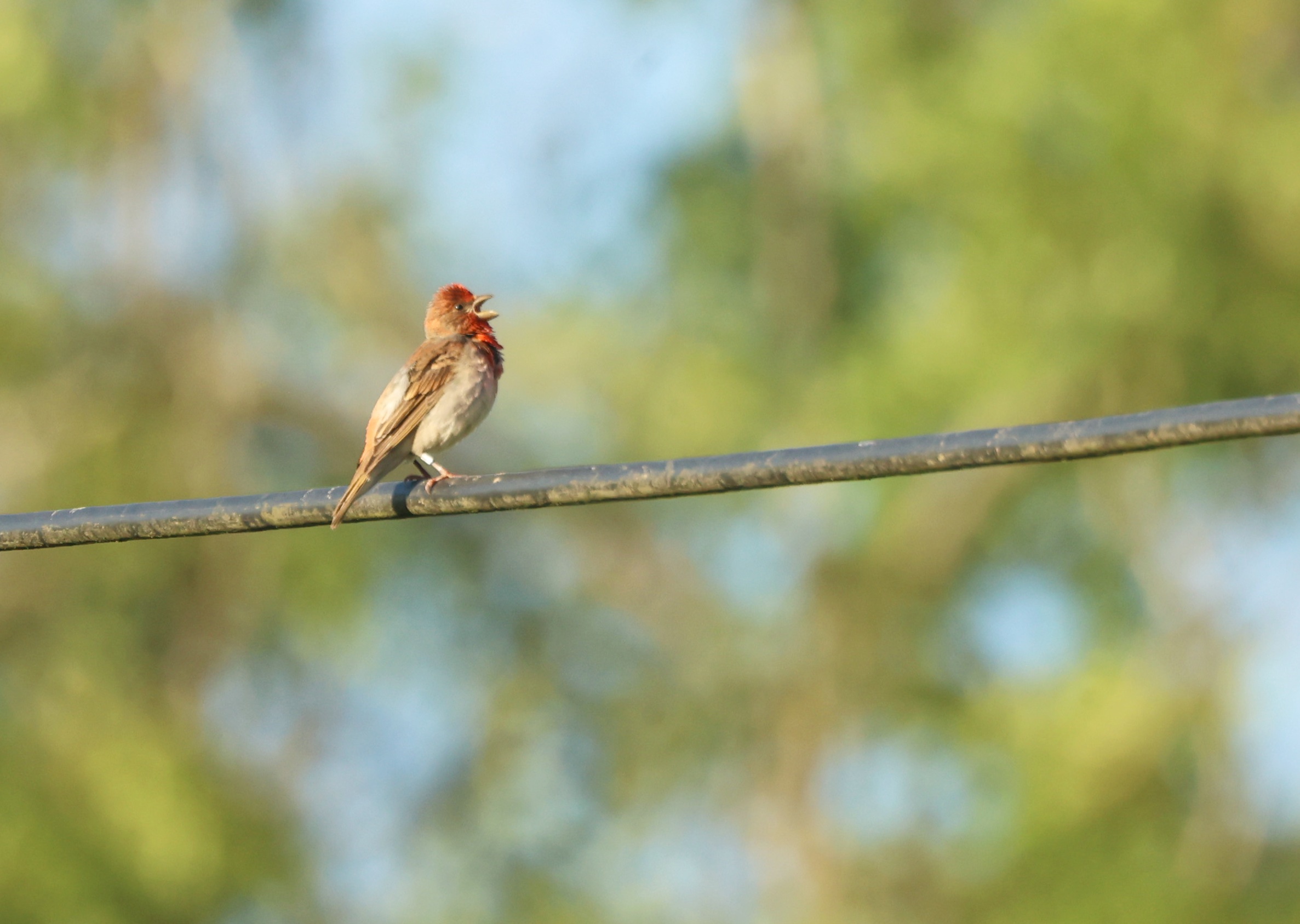
Common Rosefinch: Wow, take a look at this stunning male rosefinch! After a lifetime of only seeing female type, juvenile rosefinch where are nicknamed grotfinch to see a stinking rose red male is something special.


They have a stout and conical bill and the males have brilliant rosy-carmine head, breast and rump; heavy bill; dark brown wings with two indistinct bars, and a white belly. Females and young males are dull-colored with yellowish-brown above, brighter on the rump and greyer on head; buff below, hence their name the grotfinch.


A relatively scares bird these can be seen in the UK between May and October more often or not they are seem around the coasts of southern and eastern England, eastern Scotland, and the Northern Isles.
They typically breed from the Danubevalley, Sweden, and Siberia to the Bering Sea; the Caucasus, northern Iran and Afghanistan, the western Himalayas, Tibet and China and Japan. In winter they are found from southern Iran to south-east China, India, Burma, and Indochina. 
So to get a full summer plumage male singing and even chasing ff the resident house sparrows is a real treat.  

After arriving just after first light I could hear their obvious song enervating from a hedgerow close to the end house. The bird eventually popped on to the face overlooking the driveway. 

From there it flew to the opposite end house and and was singing from the brambles and hawthorn hedge close to the garden and Crook Road. 
Before I left it alighted upon the thick bottom telegraph wire and was singing away.


Really please to have finally caught up with it especially after dipping it a few days ago. 

19/05/2023 Gait Barrows National Nature Reserve, Silverdale

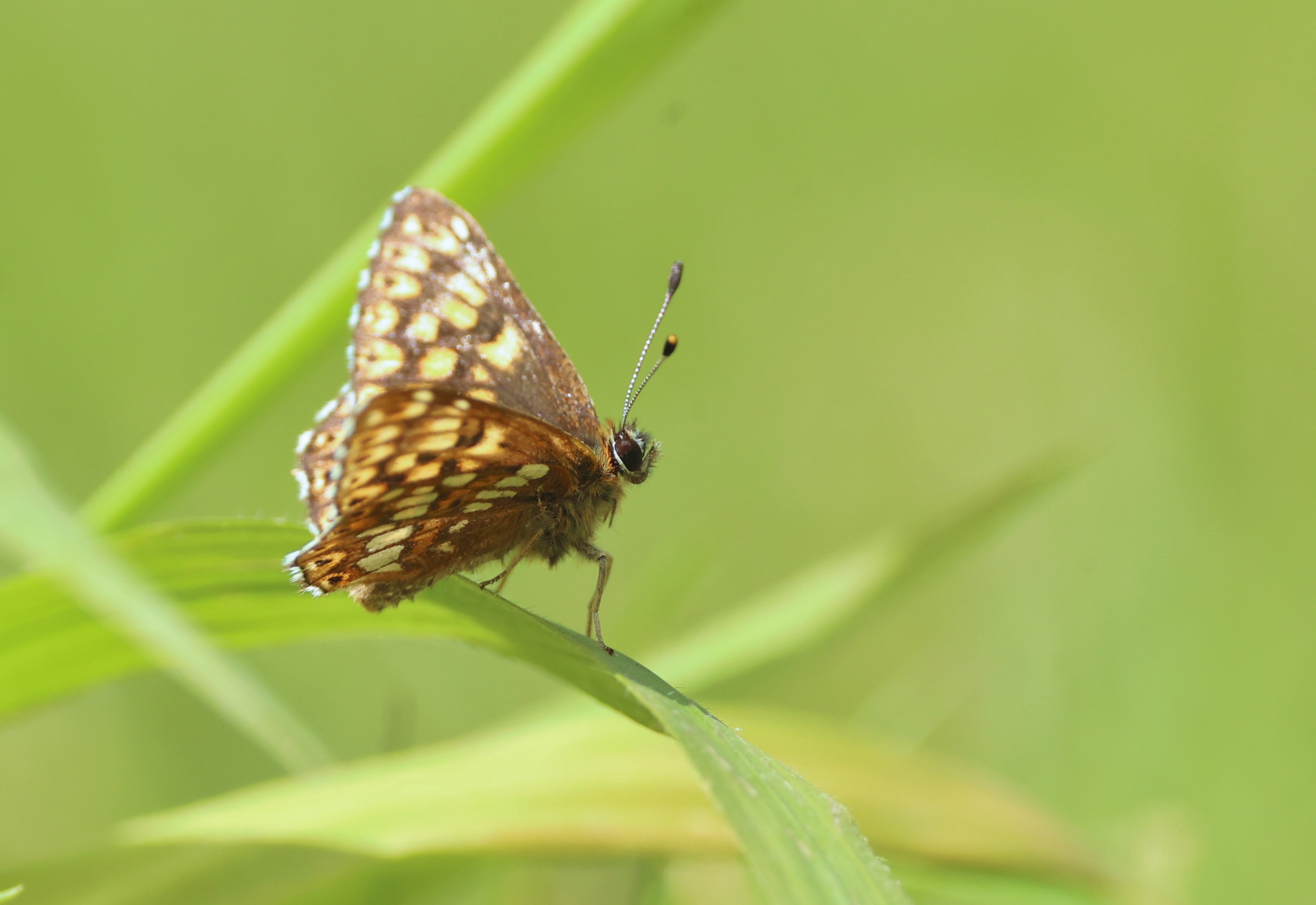
Duke of Burgundy: This little beauty is found mainly in central southern England, although small freagmented colonies are found in the north of England particually in Yorkshire and Cumbria, witch Gait Barrows National Nature Reserve being one of the premier places in the north west to see them. 
Despite its larger-than-life name the Duke of Burgundy is relatively small, with its upper surface brown with vivid orange spots it is unlikely to be confused with any other species found in the UK.


The larvae feed on the leaves of primroses and cowslips, transposing to winged adults in May and early June or occasionally a little later. The adult males of this now very rare butterfly species can be seen flying low over their territories, which are usually quite small areas of a few tens of square metres at the most; they defend their patches aggressively, seeing off invaders many times their size.
The Duke of Burgundy used to be classed as a Fritillary, due to its similar markings of pearly white spotted underwings , but it has now been identified as closer to the ‘Metalmark’ family, the only one of its species found in the UK.
Gait Barrows National Nature Reserve is an extraordinary place with a rich mosaic of limestone habitats including unique limestone pavement, yew woodland, fen and is one of Britain's most important limestone landscapes. 


Dingy Skipper: I couldn't resist a brief stop off at Warton Crag on the way home, it's by far one of my favourite places. Its absolutely stunning here looking out over Morecambe Bay and its limestone cliffs, decorated by wildflowers and colonised by rare butterflies.
One of which was there dingy skipper, a nationally scares butterfly who's larval food plant is the birdsfoot trefoil. There were dozen on the wing along the western side of the crag. 


Brimstone: I also saw my first for the year pearl-bordered fritillary although it refused to settle for me I entertained myself with this brimstone which was feeding on the red campion. The Brimstone has a most exquisite wing shape, perfectly matching a leaf when roosting overnight or hibernating within foliage.

16/05/2023 Carr Lane Pools, Cheshire

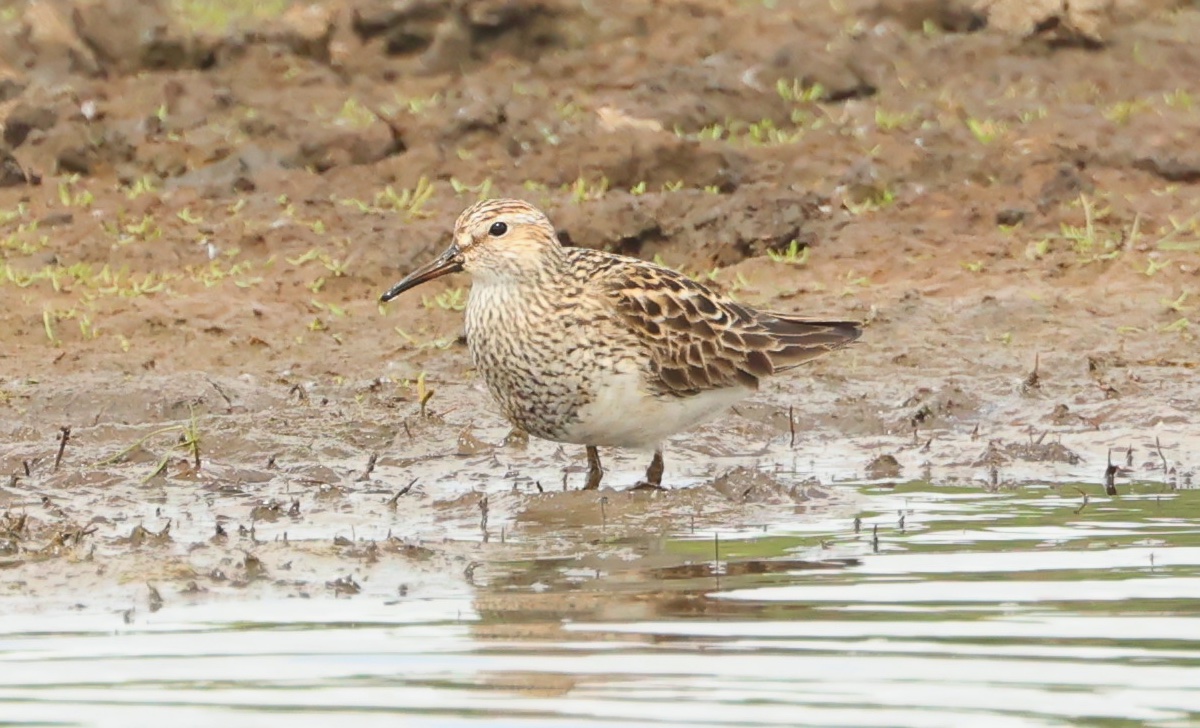
Pectoral Sandpiper: Back for a second go at the pec sand and this time my patience paid off. As just after I arrived the bird chased off a wood sandpiper and landed much closer, but only briefly before returning to its favourate island out in the middle of the pool.
Despite missing out on the Temminck's stint, finding a wood sand was certainly a highlight. 

16/05/2023 Brushes Reservoir, Greater Manchster

Wood Warbler: Toady I turned 38, yeah I'm getting old, I'm defiantly getting greyer and heavier. But regardless of all this I am blessed with a beautiful family and great job. Dawn and Autumn spoilt me with a pile of presents and a lovely walk to find a wonderful wood warbler.   

Brushes Reservoir is the second lowest reservoir of a series of four in the Brushes valley. Above Stalybridge in Greater Manchester and offers an easy 2 mile walk past Walkerwood and Brushes reservoirs surrounded by a mixture of open grassland, woodland and good views of the Brushes Valley and surrounding hills.


The bird is pretty faithful to an area along a path up a slight hill, above the Brushes Reservoir. We could hear it on approach and when we saw it the bird was continually singing and foraging out in the open. 


Wood warblers are green above and bright white below, with a yellow throat and yellow eyebrow stripe. They are a little larger than the similar willow warbler and chiffchaff but have a very distinct song. 

Thanks Dawn and Autumn for a lovely birthday.

15/05/2023 Carr Lane Pools, Cheshire

Stonechat: I was sitting at home yesterday evening with the baby while she watcthed YouTube on the couch when our WhatsApp pinged. Iggo found a pec sand at Carr Lane pools and sent a brilliant short video of not feeding off Town Lane.


Pec sands are scarce passage migrants from America and Siberia, a few are seen in spring, but the vast majority appear in late summer and autumn so this was a cracking find for Iggo one of the first local birds for spring. 


I arrived and the bird wasn't playing, it remained pretty distant, too distant for may camera but showing well in the open. I waited a few hours hoping it would come closer, but no such luck toady.

Pectoral Sandpiper: These are one of my favourite waders that come to our shores, pec sands are relatives of he sharp-tailed sandpiper, with a grey-brown back, brownest in the summer male, and greyest in winter and yellowish legs. They have a grey breast, sharply demarcated at its lower edge, which gives this species its English name 'pectoral sandpiper'.
Its been a while since I've visited Carr Lane and today was lovely with several flocks of wisest whiszzing swiftly overhead and a lovely looking male stonechat which gave some good views.
Great local bird and a another quality find by Iggo, nice one mate.

11/05/2023 Potters Crouch, Hertfordshire

Channel Wagtail: This week I've been working down near Hemel Hampstead carrying out a series of bird surveys when I stumbled across this little stunner. no on one of my sites but while out birding locally.


As I was working my way through a public right of way checking the field boundaries I noticed a familiar call of a yellow wagtail enervating from a field with some space rapeseed to find it was a blue handed variety of yellow wag.
Blue-headed and yellow wagtails are known to ‘hybridise’ in northern France, and the resulting intergrades are known as ‘Channel’ wagtails. These show much paler heads than blue-headed – silvery-grey, powder-blue or even approaching white. They turn up quite regularly with our yellow wagtails in the spring.
Yellow Wagtail: In the opposite filed there were several of the more standard yellow wags, they appeared to be paired up with a male sticking close to a female and change each other around while calling.