All the wonderful birds and wildlife of Lancashire, Cheshire, North Wales and further
08/05/2023 Haslam Park, Preston, Lancashire
07/05/2023 Little Wooden Moss, Greater Manchester
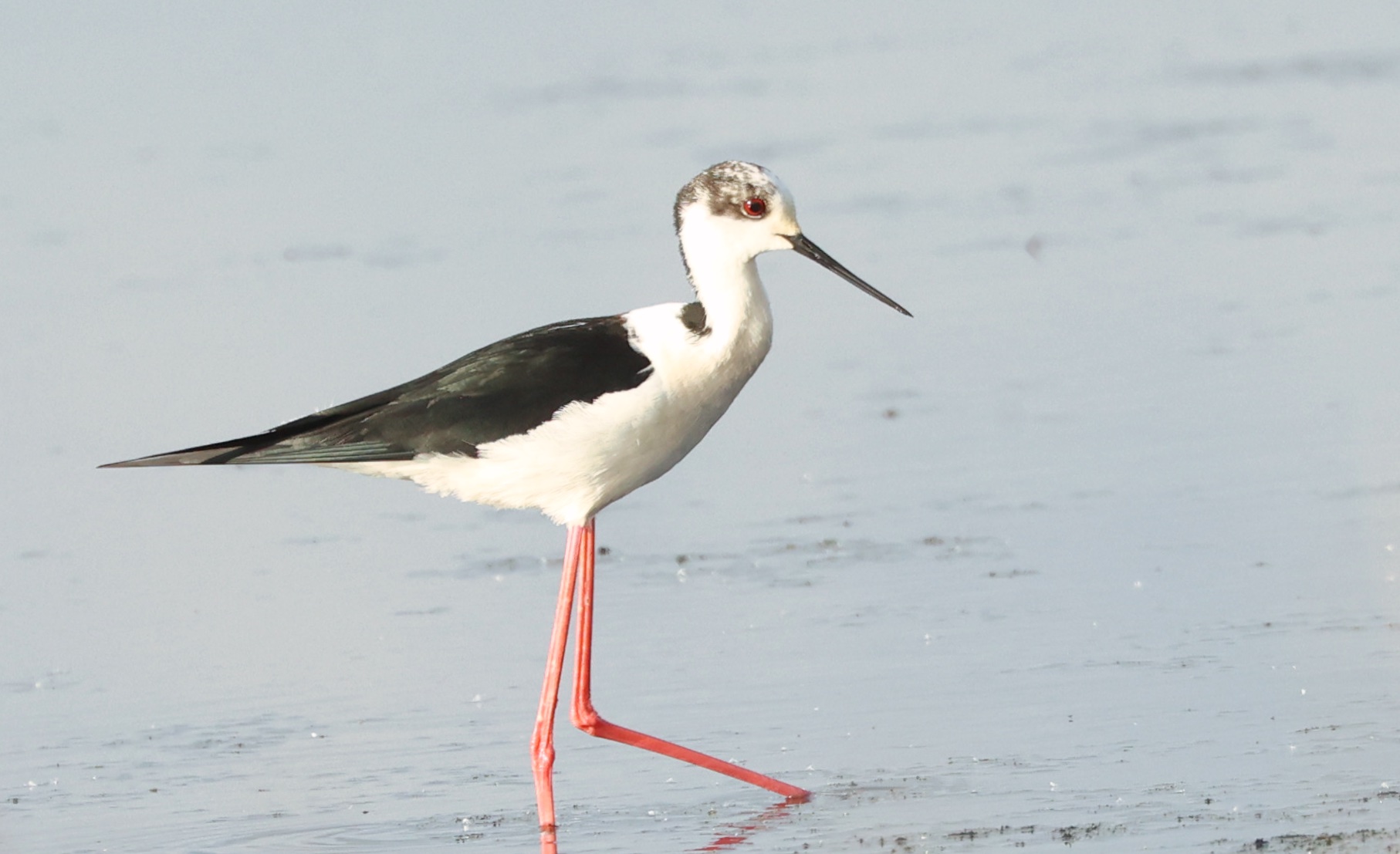
Black-winged Stilt: This graceful long-legged wader and mega rare Greater Manchester county tick was found today by Steven Nelson. I was just finishing re-seeding the grass in the garden when BirdGuides buzzed, and I grabbed my bins and camera.
Only 20 minutes up the road I made good time and was one of the first bikers to arrive, but as soon as I took my first shot the bird took off and flew high west, very high and very far before doing a u-turn and coming straight back. These smart bird are unmistakeable with their fine straight bill, ridiculously long reddish pink legs and black and white plumage. Both in flight and at rest the long red legs are characteristic, but even if these are hidden in deep water, the pure white underparts and jet-black upperparts are distinctive enough.No longer a very rare vagrant and more of an annual visitor with recent records of breeding in the UK. I was thrilled it came back as my first fee shots were pretty distant and when it returned it landed almost infant of me.
The bird was foraging along the peat bogs of West Pools and unfortuantley for those who missed it today it was gone by the morning.
05/05/2023 Lunt Meadows
The small waders breed mainly in the tundra zone from Scandinavia eastwards to eastern Siberia with much of their European breeding located in Russia. Their wintering areas are from the Mediterranean basin and northern Afrotropics across the Middle East and east across southern Asia to Japan.
Sedge Warbler: The Temminck's was pretty faithful to the low lying island on a large muddy pool called The Great White Pool and was habitually creeping along the muddy Bankside feeding away.
Common Sandpiper: We were also hoping for a barn owl or two, knowing that Lunt is a premier location for owls but they weren't out during our short visit.
02/05/2023 Low Newton-by-the-Sea, Northumberland
This is the first British record of GHL although there has been several reports previously spotted in Slovenia, Holland, Sweden and Norway making this sighting in recent years.
01/05/2023 Lower Largo, Fife
Stejneger's Scoter: A first for Britain, this rhino horned scoter has turned up within a 500+ strong super flock of velvet scoter.
The drake Stejneger's have a number of differing characteristics from that of the white-winged scoter. With winged typically darker yellow coloration of most of the bill and a less tall bill knob similar to the velvet scoter.
Stejneger's have a very tall knob, that really stands out in the field and the base of their bill is orange-yellow. White-winged scoters tend to have "two-stepped" profile between the bill and the head, compared to the long "Roman nose" profile of Stejneger's scoter similar to that of a common eider.White-winged Scoter: Not only was the super flock home to the Stejneger's but three white-winged scoter, both new birds for my British list.
27/04/2023 Seaford Head, East Sussex
Another theory is that it landed on a ship after becoming lost and tired and hitched a ride to the UK, perhaps this is how the majority of American passerines make their way here?
23/04/2023 Whinfell Tarn, Cumbria
This bird has some folk excited and I share their enthusiasm to add another North American vagrant to our British list, but the sceptics still question.
The bird is unlined, completely able to fly and has a routine where it roosts on the Tarn and then dispersers possibly back to the River Kent near Kendal where is was first observed and then back again to roost while it associating with both tufted duck and gossander.
23/04/2023 Duncombe Park, North Yorkshire
24/04/2023 Yarrow Valley County Park, Chorley, Lancs
Both parents were actively feeding the young in the nest and very active foraging up and down the small stretch of the River Yarrow.
The young must have fledged the nest within the last week, they were photographed on the 18th of April carrying food and now they are rebuilding their nest.The Dipper is the UK's only aquatic songbird and it's underwater feats are quite amazing, they can hold on to the wet rocks in fast flowing rivers while foraging under water.
The pair were coming back and fourth with a beak full of grass, twigs and moss and I observed them foraging and catching aquatic invertebrates.
Dippers nest very close to water, using cavities in banks, holes in walls or trees. Both sexes build the nest which is large and domed and made from mosses, grasses, leaves and hair.
Dippers lay 4-6 white eggs in March or April which are incubated by the female for 14-16 days. Males may feed the female at the nest and the chicks are fed by both parents and fledge at 20-24 days.
17/04/2023 Totteridge Valley, London
There were two males and a single female in a small area that the locals call 'wheatear corner' that where forging close to an open gate. They weren't partially shy and ocssaiionally aligning upon a nearby tree and pulling worms out of the ground.
The weather down here was perfect for a spot of post-work birding, T-shirt weather has been a nice alternative then the long vantage point surveys of recent months, clad in fleece, jackets and waterproofs.