30/01/2023 Ingleby Barwick, Cleveland

Waxwing: This week work has taken up to Middlesbrough, part of the world I had';t really spent much time birding, sure I've twitched a few birds there but never bird area properly. 

Over the next few months I will have the opportunity to get to know the area and hopefully find something good on my travels. 

Toady before I started my survey I thought I would join the party and go to see the long staying waxwings which have been eating ether way though the barriers around and area of Ingleby Barwick called The Rings. 
When I arrived one bird was perched high in a silver birch facing the roundabout, this was pointed out a cute family on their way to school, but before I was able to take a phot the bird short off. 

I relocated all six birds off Myton Way but again they flew off almost as soon as I spotted them. 

These are great birds, the male has soft, pinkish-grey plumage with a paler rump and underparts, and a rufous patch under its tail. The black wings have yellow and white stripes, and long, bright red tips that look a little like sealing wax and which give the bird its name. The head is reddish-brown with a black face mask, and it has a short, pink upright crest.  

The female is very similar to the male but has less distinct markings, while juveniles are duller with a much shorter crest and a smaller face mask.

26/01/2023 Covenham Reservoir, Lincolnshire

Falcated Duck: After a great week in Lincs working alongside Gary Allwood counting lapwing and looking for geese we didn't expect to see this great little duck.  

The BOU accepted the falcated duck onto Category A of its British list in 2019, giving this an extra urgency to see, so Gary and I spared no gas and made it in time before the light faded. 


Falcated Ducks are native to China and Japan, breeding in Eastern and Central Siberia. They are highly migratory, and vagrants have occasionally reached Europe and even Britain, though escapes from captivity cannot be ruled out.


Kestrel: The duck showed well as it paddled the entire length of the reservoir associating with a large mixed flock which mainley included mallard, not the best bird for it to be hanging around with. 

There will be plenty of speculation, assertions and opinion about the ducks provenance, all I can do is hope.
Great Northern Diver: Another decent bird on the reservoir was this long staying GND that showed well along the western side, feeding close before diving and appearing further out win the water. 

09/12/2022 Daisy Hill WWTW, Westhoughton

Water Pipit: Daisy Hill waste water treatment works (WWTW) does not provide extensive wetland habitats suitable for interesting birds but it does provide areas of rough grass, scrub and hedgerows that are becoming increasingly rare in the wider area.
In recent years modern WWTW's can be valuable winter feeing area for a wide variety of birds as they come to feed around the filter beds. A returning bird that I am always pleased to see is the water pipit which I saw here last winter.
Despite making several visits this bird was found by local legend Phil Rhodes. 
Its a nice little place, and I've made a couple of visits since the bird was found and had a few snipe, grey wagtail, bullfinch, raven and tones of meadow pipit. 

03/12/2022 North Lancashire , Leighton Moss and Fleetwood

Yellow-browed Warbler: Chris and I had a plan to get to Leighton Moss for first light and get some point blank shots f their showy bittern. But our best laid plans went array, when the bittern decided to show briefly before flying to the opposite reedbed, still we had plenty of other good birds to find. 
In amongst the flocks of usual Leighton Moss favourites, like long tailed tit and marsh tit there was a rare YBW.  It’s been seen regurally along the path towards Lower Hide over recent weeks – we found it c50m from the Causeway turn. These small warblers are generally seen in passage, with very few numbers overwintering in the UK.
Marsh Tit: In the same area as the YBW there was a small clearing where some thoughtful birder had placed some seed on the ground and it was here there was a furry of activity. 
Leighton Moss in one of the premier and reliable sites for marsh tit, I see them on every visit to Leighton Moss, but rarely as good as this. There were three birds that kept coming down to the seed and showing incredibly well. 

Nuthatch: The seeded areas also attracted the more usual tits and even a nuthatch who bullied all the other birds away and kept the seed to itself. 
Bearded Tit: We put a birder and his son on the YBW and he repaid the favour by telling us that the beard tit were on the grit trays, so we hot-footed it back down the causeway.

The gathering crowd were firing their cameras as we approached and we sone blowed our way into the middle of the pack as the beards emerged out of the reeds and on to the grit. 

Really good to see these little stunners up close and personal.  

Snow Bunting: Our next stop was to Fleetwood hoping to see the long staying snow buntings that have been faithful to the beach at the back of the marina lake. 
When we arrived there was no sign of the birds, we spent the next hour scanning the dunes, walking over the shingle and scanning the tide line. 

Nothing, so sight or sound. 


We were starting to get a bit fed up before giving it one more walk over, when the birds flew around the corner and landed at our feet!

Great day out locally. 


03/12/2022 My Garden, Abram, Wigan

Sparrowhawk: After arriving home from a short walk with the baby I parked up on my drive and could hear a torrent of contact and alarm calls emanating from my garden.

I sorted out the baby and tentatively made my way to to the living room and peered through the French windows and saw this all brown hawk sitting, squat on my fence.


I've had a couple of sparrowhawk flying over the garden and have even had one on my neighbours roof, but this juvenile sparrowhawk is the first one I've seen visiting my garden in the 11 years I've lived in this house. 


I take the view that having a sparrowhawk visiting your garden is a good thing and the presence of such a top predator indicates that the bird populations in my garden and my local area redoing well. 


Since bouncing back, sparrowhawks have spread into many suburban parks and gardens they have adopted well relying on the element of surprise  to catch their prey. And as such will often follow a regular route to get close to potential prey, which in gardens means using the cover of a hedge or shed. 


The bird wasn't phased by my presence at the window pressing my big lens against the glass, it wasn't even bothered as I stood on s stool and peered over the back fence to get an unobstructed view without the double glazing. 

It eventually whizzed off over the fence and out of sight. Hope it returns. 

02/12/2022 Amberswood Lake, Hindley, Wigan Amberwood

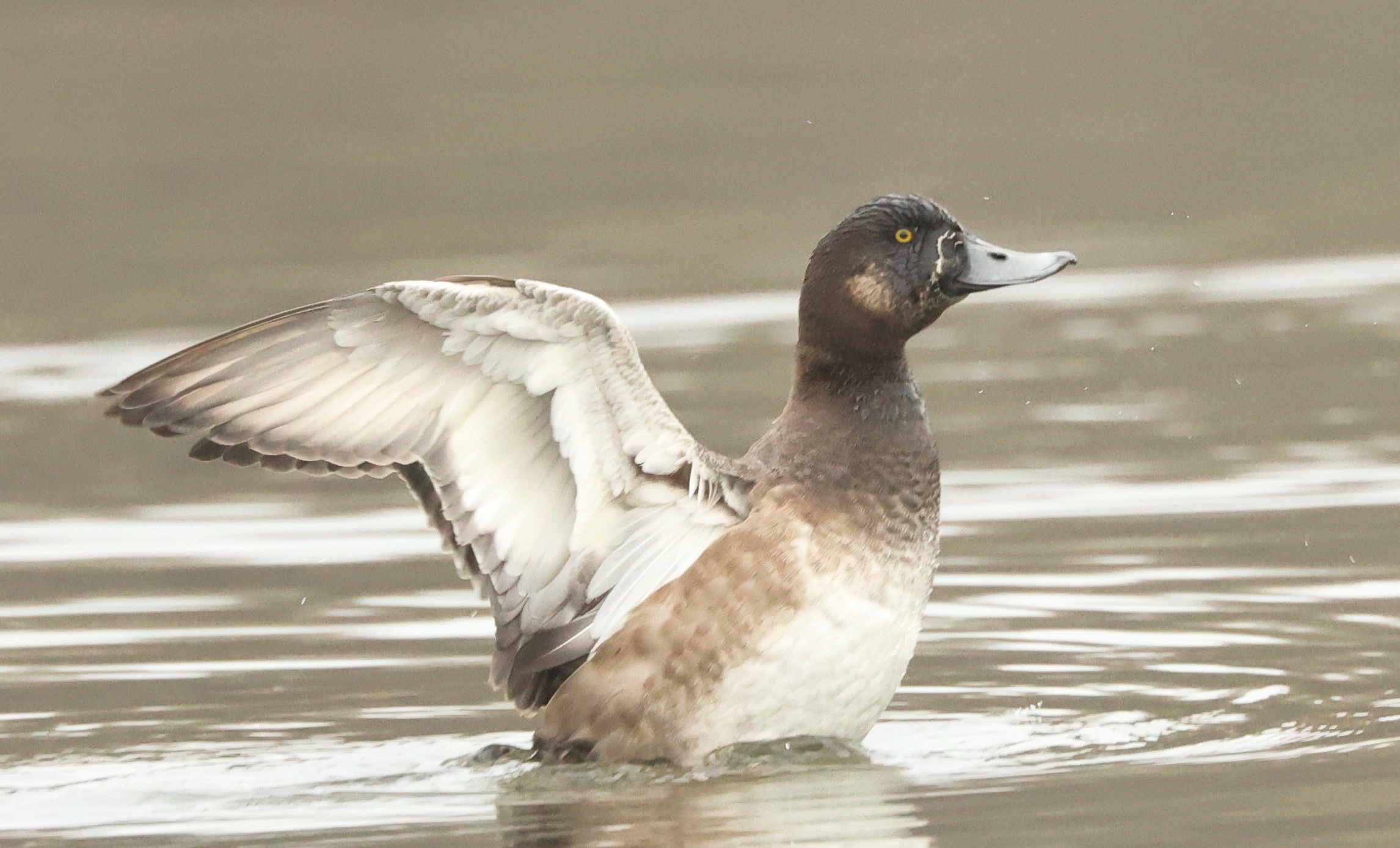
Greater  Scaup: Working away this week it was nice to catch up the pair of 1st winter greater scaup that have been spotted mid week on a local flash, a stones throw away from where I live. 
Amberswood is one of the local flashes I've not been to before, part of the Flashes of Wigan and Leigh National Nature Reserve and consist of 160-hectare of wetland mosaic consisting of a lake and a series of smaller ponds and lowland raised bog, linked by ditches and streams and interspersed with species-rich grassland and woodland.


The scaup were confiding and not particularly camera shy, foraging close in shore. 

This is a lovely little place that offers something for everyone a new patch to keep an eye on. 


13/11/2022 Uwchmynydd, Gwynedd

Isabelline Wheatear: The end of the year is fast approaching and I'm keen to keep my momentum and pick up new birds when I can. 

So seeing a window between my weekend dad duties I headed down in hope for the Issy that has been hanging around Llyn Peninsula.  


When we arrived we noticed Trevor Ellery and Phil Novis togging a bird in a small depression close to the cliff. The sight of other fellow twitters on site togging a bird after a three hour drive is definable a welcome sight.

Means the bird is still present. Fantastic.
A particularly tricky bird to identify, due to its similarities with Northern wheatear. The major identification features of Isabelline wheatear include the white of rump starting lower down the back with a broader terminal black tail band and shorter stem of ‘T' and whiteish underwings. 
Issy also have a place washed out plumage with a lack of contrast between the upperparts and wings.


This bird takes me to 418, my target,  or hope is to hit 420 for the 2022. 

Here's hoping. 

29/10/2022 Slaughden, Suffolk

Alpine Accentor: After a few days battling a cold that I was glad got get out and blow the cobwebs away and get the adrenaline pumping again with the excitement of a brand new bird. 
We arrived to a large crowed standing on the horizon, all stood like Antony Gormley statues, all stationary whole holding their binoculars up to their eyes.  This is what you want to see, it looks like everyone is on the bird. 
As we approached he statutes came to life and collectiveley turned around and looked in the opposite the direction. The bird had flown. 

Lucklily it dropped in next to use on the marsh and perched up for us all.


Alpine accentor are very similar to dunnock, although slightly larger than its relative, they have a streaked brown back, somewhat resembling a house sparrow, but adults have a grey head and red-brown spotting on the underparts. It has an insectivore's fine pointed bill.  Sexes are similar, although the male may be contrasted in appearance. Young birds have browner heads and underparts.
These small dunnock-like birds are found throughout the mountains of southern temperate Europe, Lebanon and Asia at heights above 2000m. 

It is mainly resident, wintering more widely at lower latitudes, but some birds wander as rare vagrants. 

It is a bird of bare mountain areas with some low vegetation so, the long single spit that lies south of the Aldeburgh Martello Tower and Orford Ness with its space vegetated areas rock and sea defences isn't that far away from the rocky mountainous plateaus these birds are more topically used to.

The bird was feeding on the seed heads of yellow-horned poppy and foraging between the large boulders which make ups the sea defences. 

it was even seen feeding on the wall, between the mortar and on the roof of the impressive Martello Tower.

The bird was remarkable confiding not passed by the gathering roads of birders or toggers who came to see it. 

There were some reports of unfortunate behaviour but this was more or less instigated by the ani-twitcher rumourmill. 

With a bit of time and patience the bird would freely approach the birders, affording some unbelievable views. 

We were all blown away by just show showy the bird was, perching juts a few feet away from us and foraging while its freely creeped closer and closer. No need to case it or anything, it was happy and content to exhibit normal behaviour while being watched.   
Jus the tonic to make me feel better after a few days of being run down, this is such a good bird. 

23/10/2022 Marshside RSPB, Southport

Lesser Yellowlegs: So today I convinced Dawn to bring Autumn and come with me to Marshside, sold off the back of a nice morning out after the rain and a walk with our wellies on. 


The baby loved it as she jumped and slashed around in the muddy puddles along the top of the bank overlooking inner Crossens and I was happy  togging the rare American vagrant. 


This rare vagrant breeds from western Alaska and Canada east to western Quebec and spends its winters on the coasts from southern California and Virginia southward through Central and South America. 
Their preferred habitats include coastal mudflats and lagoons, inland lakes, ponds, rivers, sewage works, and flooded grasslands. Not that dissimilar to what Marshside has to offer.
The bird spent most of its time on the nearside bank where the water had retreated exposing a small area off mud. Although it did from time to find get spooked by dog walkers and their companions but often returned. 
The bird showed exceptionaly well, although the predator fencing around the border of inner Crossens made it very difficult to photograph the bird. 
A great morning out spent with a great local bird, and a nice walk with the family.