28/01/2022 My Garden, Abram, Wigan

Willow Tit: Since the 1970s willow tits have declined by 94% and lost 50% of their breeding range, but Wigan remains a stronghold for this species.  During  the winter months willow tit can be regularly  be seen at Pennington Flash Country Park and Wigan Flashes, both have feeding stations are in place. 


But for me, every now and again I get a wintering bird visit my very own garden feeders. Not a common occurrence so always a special moment when I see one.

23/01/2021 Filey Brigg, North Yorkshire

Richard's Pipit: Finally, after several failed attempts and the shame of having such a tarts tick omitted from my list, the ongoing banter from some mates and the anguish of the dips, the day has come, Richard's pipit is now on the list. 


Originating from Siberia, Mongolia and China dick pipis then typically winter in southern Asia but some apparently take a westward or northwestward path, mostly arriving in Shetland, or on the east coast or the south-west of England. Dick pips seem an increasingly difficult bird as the years go by.


I was thrilled when the bird came flying over my head calling as it undulated in flight, its call sounding slightly similar to that of house sparrow.  We eventually  relocated the bird within the fenced amongst the grassy tussocks. 

A great day out topped off with 60 plus lapland bunting at Bempton and in the great company of Patrick, Gary, Damian and Neil.

22/01/2021 Daisyhill Sewage Treatment Works, Westhoughton

Water Pipit: A scarce bird these days across Greater Manchester it was a real treat to catch up with it after dipping a water pipit at the same place last year

Found by Phil Rhodes and the information passed on to me by Sam Harris before going onto Manchester birding forum. 


It is most likely that this bird has come from its breeding areas in the central European mountains such as the Alps to overwinter under the sunny skies of Bolton. 
Water pipits are famous for sending their time at sewage treatment facilities, feeding on the filter beds, but they also favour habitats that include, rivers, lakes and flooded gravel pits, lowland wet grasslands and coastal fresh and brackish lagoons. 
This stocky bird really stood out amongst the smaller meadow pipits, that were also more olive brown in color then the much grey, plaer water pipit.  

It seemed very settled and I watched it for about an hour before moving on.

To my delight it would regularly perch up on the water pipes that were slowly circling the filter beds, brining the bird closer to me as they spun around. 


15/01/2022 Filey Brigg, North Yorkshire

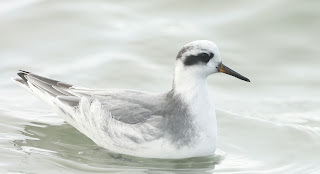
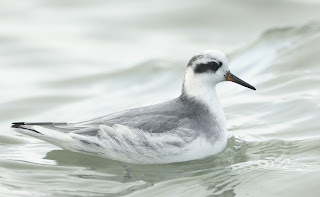
Grey Phalarope: Arriving with the hopes for finally adding Richard's pipit, a bird which has been in the area since early December and finally settled in the top field at Filey I thought this would be a sure thing. 


I shouldn't have been so naive, my years of twitching should have have made me more realistic....there is no such thing as a sure thing when it comes to twitching.  
 
When Damian Young and I arrived it was foggy, thick freezing fog at that!


Despite what the misleading weather apps said, we were promised blue skies. This is probably the reason the bird had moved further around or even became less active and wasn't seen the day we were there. 

Still, there is no better place for a dip then Filey. it's a great place and offered great views of two grey pahls feeding off the end of the Brigg, purple sandpipers and a great northern diver.
Purple Sandpiper: Filey brigg is famed for its purps where during late summer and autumn, purps from Scandinavia, Svalbard, Greenland and some Arctic islands migrate to the UK for the winter.
They can be found on rocky Brigg, especially the seaweed covered breakwaters. Look out for flocks of turnstones, searching for food amongst the seaweed and you will see these dumpy little birds alongside them.
Interesting colour ringed and flagged individuals feeding amongst the turnstones, with information from Will Scott that shows the birds were possibly by Poppy Rummery and the team at Filey Bird Obs at Filey Brigg itself?
So another Richard's pipit dip under my belt, looks like I will have to wait a little longer. 
 

02/01/2022 Denhall Quay, Neston

Short-eared Owl: One of the premier places for SEO's in the North West can be found towards the old sandstone quay below the Harp Inn where a vast saltmarsh dominated by marram grass. 


Here's lies the RSPB's Dee Estuary nature reserve a huge complex area of habitats covering over 6000 hectares including varying wetland habitats making it the fifth largest RSPB reserve and the largest protected coastal wetland in the UK.
It's important to note that the Dee Estuary as a whole is a designated Special Protection Area for its bird populations, and the saltmarsh itself is a Special Area of Conservation for its plant diversity.
So, it's no wonder that the area holed large numbers of SEO's, hen and marsh harriers, all of which make their winter and some even their summer home on this marsh. 
Today was a shortie bonanza with at least 5, possibly 7 SEO's hunting and quartering from the Denhall Quay.  
This area of marsh is well watched and well known to birders and photographers, it runs parallel to a very popular walking route which draws countless dozens of dog walkers and locals all of whom venture out over the well worn track across the marsh.  
The RSPB have put serval signs regarding ground nesting birds during the breeding season, and from Denhall Quay you can't walk out over the far reaches of the marsh but this doesn't seem to phase the owls as I had three individuals come within a few yards of the Harp Inn, the car park and the area of reedbed close to the Quay.
There was so much action that there were several small groups of birders and photographers spread out watching different birds, so there really wasn't a scramble or rush to see any. 
I love it here, there's a real wildness to the expense of saltmarsh although I know it's pretty well managed. But looking out over an area teaming with birds is always special.  

22/12/2021 Samlesbury, Lancashire

Belted Kingfisher: Earlier this week the BK finally gave up the ghost and decided to settled on a small stretch of the River Darwen. Huge congratulations to whoever found it as many were trying since it left its original area along the River Ribble. 

Its new home was on a bend along the River Darwen upstream from of Roach Bridge. 


From here  the bird can sometimes been seen perching upon the branches at eye level and  looking downstream perched above the water.  Definitely a better area then at Redscar Woods.  Now its been found in a reliable area its fast become a very popular bird with hundreds of birders turning up. 
I  would recommend any who need it goes quickly, as soon as you ca before the locals and landowners start to kick up a fuss. 

This is probably my last post before Christmas so let me take this opportunity to say 'Happy Christmas' to all my followers, regular readers and thoses who click on the link and read my musings and enjoy my images. 

20/2021 Southport

Snow Bunting: A nice trip out to see the snow bunting that have taken up residence in Southport and i wasn't disappointed as typical  in their nature they were very confiding. 


There were five birds, including this paler male bird feeding along the strand line amongst the razor clam shells close to the sea wall, right next to the pier, on the northern side. 


They didn't seem bothered about the passing traffic, the dog walkers or the admiring crowd of birders.  It's been a good year for snow bunting locally with long staying birds at Crosby, Leasowe and reports of them further down the Mersey. 

Always a nice bird to catch up with.

15/12/2021 Pennington Flash

Water Rail: Said to be one of the most elusive birds that we have, shy and reclusive staying out of sight in the reeds, water rails are usually heard and not seen by their unmistakable loud piglet like squeal sound that they make.But occasionally during the winter months they can be seen feeding on split seed around the feeders of Pengy's Hide.

Winter is a good time to see water rails as the vegetation cover has died back and the birds are forced out into the open to search of food. 

The bird was typically nervous only coming out in full view for a few minutes at a time, occasionally rushing in to pick up a few seeds before rushing back to cover. 

On a day like today, after a few weeks of bad weather and thick cloud it was good for the soul to get out under the blue skies and lemon light of the winter's morning before returning to work and logging on back on. 
 

04/12/2021 Water lane, Crossens, Southport

Snow Goose:  A wild windy day, but between work and the baby I have to take what little time I have to get out birding when I can. 

So, today my destination was Southport to try my luck with the snow goose. 

When I arrived a message came from from Stuart Derbyshire saying that the bird had flown off the marsh and landed in a stubble fields close to the pumping station, I wasn't quick enough to see it here but it was relocated around the corner off Water Lane.  
The bird was associating with around 20 pink feet and despite the strong winds and poor weather it was particularly mobile, fling between the fields around Crossons. 

Thanks again to Stuart Derbyshire for the gen. Big help, as usual. 


27/11/2021 WWT Martin Mere

Brambling: Having had to drop some wedding albums off in for a client not too far from Ormskirk I decided to spend the morning at Martin Mere, too cold to trapes around the whole reserve I spent much of my time sheltering at the Janet Kear hide were a couple of brambling had taken up residence. 
Originating from Scandinavia and across to Siberia, they only spend  the winter months here in the UK, though a tiny number sometimes stay through the summer period and have even been known to breed, but this is pretty rare. 
Brambling are famous woodland birds that search for food in mixed flocks with chaffinches so a place like martin Mere is ideal with a regularly topped up feeding station along a small woodland edge. 
In the winter the male bird has a streaked head, orange breast plumage and a white rump, in the spring the males head becomes much darker in colour with a rich orangey red colour on his wings and breast. The females are not so bright and cheerful in colour, though have similar patterns in their plumage to the male.
Here is the male, a stunning little bird with mottled upperparts with brown edges and grey tips on the feathers. The scapulars have broad pale orange tips and the median and greater coverts are orange tipped with white.


There was one male and up to four females feeding on the split seeds around the feeders and perching up in the bushes around the hide. 

Definitely a highlight of a very enjoyable (if a little cold) morning. 
 

25/11/2021 River Ribble, nr Brockholes

Belted Kingfisher: From Florida to Preston this extremely rare belted kingfisher has been on the river near Redscar Woods off on the Turnbrook mouth since the 8th of November. 

Since then the bird had only been seen by a handful of fishermen and no birders, some folk, perhaps even myself were thinking it didn't exist or was long gone. 


I've been three times over the past few weeks, searching for the banks and listening out for what has become a mythical bird,  I even spent a few hours waiting in one area with a panoramic view of the river hoping it would fly up and down, hoping for just a glimpse.
Well today I got better than a glympse, after a report from around 12am I left work and headed straight from Bolton and was there within half an hour or so.

When I arrived the bird was in full view on a overhanging branch before taking cover a little further down stream. It made several passes and alighted upon a hawthorn on the opposite side showing really well.


I was absolutely delighted. A real local MEGA!

28/10/2021 Papa Westray, Orkney Islands, Scotland

Varied Thrush: This was such a mega twitch, not only as the bird is a 'super mega' but the logistics the planning and my stress levels were mega! 

News broke on Wednesday night which saw a few small groups of twitchers make their way and successfully connect the following morning. 


I made my plans on Thursday afternoon and headed over with Patrick Thursday evening with the thinking that we would see the bird Friday afternoon and back back home Friday evening. 

At this stage we had no boat booked from Kirkwall and no concrete plans that we would make the return connection back to Aberdeen.  
This is the 2nd record for the U.K. with the last one recorded way back in 1982!

These beautiful, boldly-patterned thrush with their exquisite combination of blue-gray, orange, and black originate from the Pacific northwest of America. 

We were really lucky in the end, helped by some smooth talking and bartering we managed to book onto a fully booked charter boat across from Kirkwall to Papa Westray. We made all our connection on time with one or two by the seat of our pants. The whole thing was gamble, one that paid off. This time at least.
When we arrived the bird was showing really well feeding on the lawn by a small cottage, the bird was doing a circuit of the building, its walls and gardens and appeared to be really settled. 
My heart was pounding and I was barely able to keep the camera steady when I fisrt laid eyes on it. This was a really special bird and a great twitch, full of tension and the excitement of a the big pay off.